Note
Go to the end to download the full example code.
7. Choosing a variable grouping
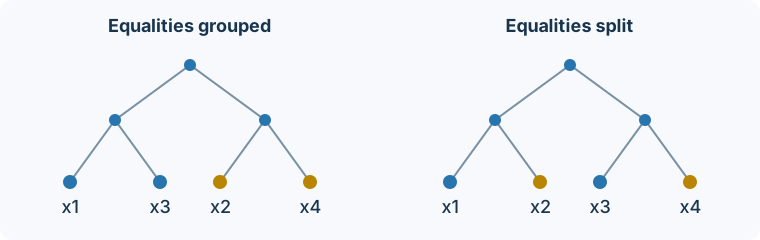
A vtree groups variables into subproblems. Consider the function
(x₁ ↔ x₃) ∧ (x₂ ↔ x₄).
One vtree puts each equality together; another splits them across the root.
from tididi import Vtree, literal


def equalities(vtree):
    x1, x2, x3, x4 = [literal(vtree, variable) for variable in range(1, 5)]
    return (~(x1 ^ x3) & ~(x2 ^ x4)).minimize()


grouped = equalities(Vtree.balanced_over([1, 3, 2, 4]))
split = equalities(Vtree.balanced_over([1, 2, 3, 4]))
print("Models:", grouped.model_count(), split.model_count())
print("Pairs with grouped equalities:", grouped.pair_count())
print("Pairs with split equalities:", split.pair_count())
Models: 4 4
Pairs with grouped equalities: 5
Pairs with split equalities: 12
The function has four models in either case, but the circuit size changes. A useful grouping keeps strongly related variables together.
Use Vtree.join(left, right) to assemble a particular grouping or
Vtree.linear(variable_order) for a right-linear vtree. These constructors
create new domains. Construct or reload all operands on the resulting
shared vtree before combining them.